


02/14/26 - 04/05/26
Cleveland Botanical Garden

Destinations
Live in the heart of a cultural hub. From newly constructed townhomes to charming single-family homes to luxury hotels, living in University Circle has never been more appealing.
For Current

Destinations
Upcoming Events


Live in the heart of a cultural hub. From newly constructed townhomes to charming single-family homes to luxury hotels, living in University Circle has never been more appealing.
With strong anchor institutions and an abundance of arts & cultural as well as private sector businesses, University Circle is one of the largest employment drivers in the state of Ohio.
There is nowhere else in Cleveland with the density of world-class educational resources as University Circle. Preschools, grade schools, high schools, and prestigious universities call this neighborhood home.
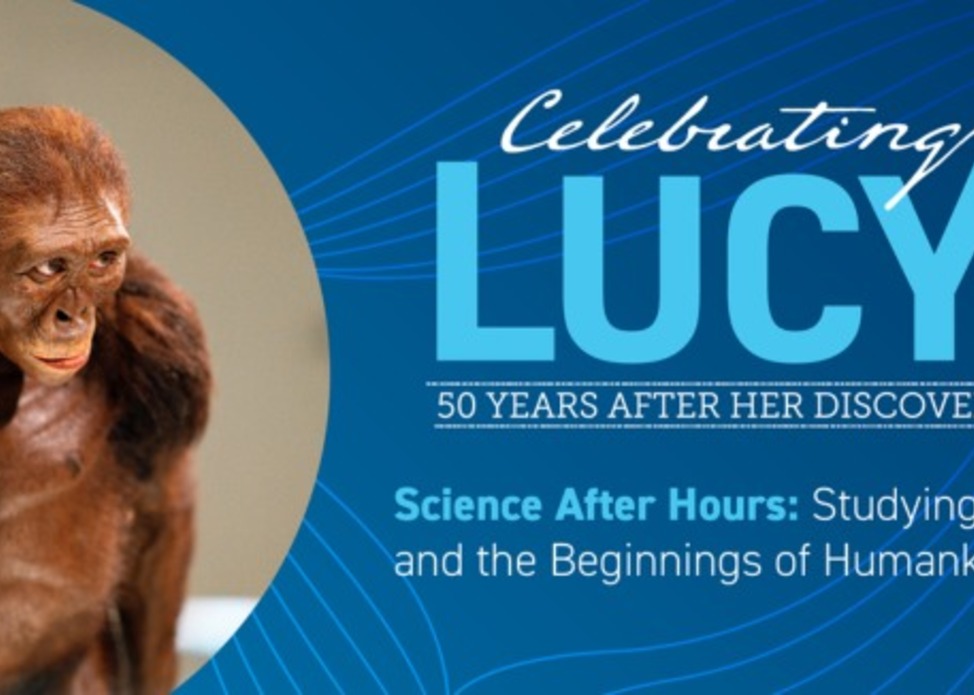
Lucy and the Beginnings of Humankind: The Geology and Natural History of How She Lived and Died
Cleveland Museum of Natural History

Experience an extraordinary new adventure. At the transformed Cleveland Museum of Natural History, every visit offers the opportunity for new discoveries. Explore our reimagined spaces and uncover your place in the extraordinary story of life on Earth. Get Discounted Admission When... more
Presenter: James (Jim) Aronson, Ph.D., former Professor of Geochronology and Sedimentology, Case Western Reserve University, and Emeritus Professor, Dartmouth College
Join us at the Cleveland Museum of Natural History for the kickoff event in our new lecture series, Science After Hours.
In 1973, a young Jim Aronson, of Case Western Reserve University (CWRU), was invited to be the geochronologist for an exploratory project at Hadar, a site in the Afar Triangle of Ethiopia. Dr. Aronson, who had recently developed a system for dating minerals, joined project leaders Dr. Maurice Taieb, of France, and Dr. Donald Johanson, of CWRU and the Cleveland Museum of Natural History.
In this talk, Dr. Aronson will take you on a virtual field trip to the two most famous fossil localities at Hadar: AL 288, where Dr. Johanson would discover the iconic fossil “Lucy” in 1974; and AL 333, where the remains of at least 13 hominins (a group known as the “First Family”) were recovered in 1975 and 1976. Dr. Aronson will discuss how he used comparative sedimentology to reconstruct the ways in which Hadar’s paleo-environment differed from today’s very hot and dry Afar Triangle. Not only did he date the rock layers as spanning 3.4–3.0 million years ago, but he also found strong sedimentary evidence for a wetter, more diverse paleo-ecosystem in the Afar. This environment ultimately gave rise to our species—Homo sapiens.
Dr. Aronson will bring one very special rock hand specimen from his first Hadar season (1974) that reveals just how Lucy died 3.18 million years ago. Determining how the "First Family" died is a challenge because this group of fossilized bones was in a much more advanced stage of erosion than Lucy. The bones were mixed up and scattered widely over a steep slope; only a few were preserved in their original context. Dr. Aronson will share what those bones and their enclosing sediments can tell us about how this remarkable group of hominins, members of Lucy's species, lived and died about 3.22 million years ago—about 40,000 years earlier than Lucy.
Doors open at 5:30pm; the lecture will begin at 6:30pm. Food and drinks will be available for purchase at Origins Café before the lecture.
General parking is $20; member parking is $6.
 View All Events
Signup Be the first to know about special events, openings, news and more!


